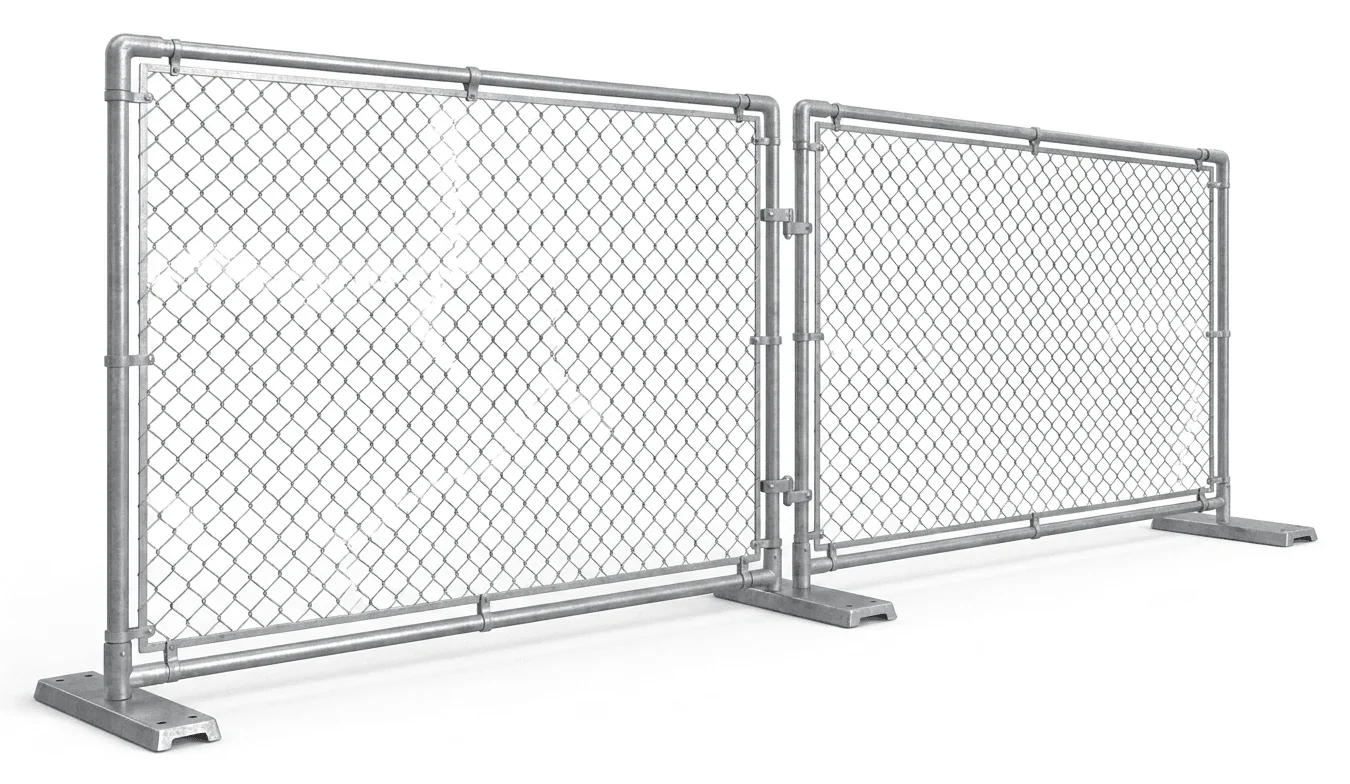
Perimeter and pathway layouts start with where people, forklifts, and aerial equipment actually move. Stockton’s large, flat logistics yards and port-adjacent zones need long, straight runs with clear sightlines, while interior aisles in high-bay buildings require tight turns and stable bases on smooth floors. The regional climate adds dust that can reduce footing on panels and winter moisture that softens unpaved soils.
Define the control objective first
Is the goal to separate pedestrians from forklifts, block off aerial lift swing areas, or secure a workface near docks? Each objective changes panel height, base type, and site-stability factors strategy.
Can the barrier sit below the task or must it offset from equipment swing paths? A boom’s tail swing or scissor lift turning radius can dictate stand-off distances. See /aerial-lift-rental/ and /boom-lift-rental/ for task geometry references.
Exterior runs in Stockton yards
Long, straight fence lines are common along staging lanes. Plan for wind exposure across open flats and for dust that can migrate under gaps if panels aren’t seated well on grade.
After rain, agricultural soils and fill can soften. Base plates and site-stability factors behave differently on damp ground than on compacted pavement; actual conditions and site procedures govern any setup.
Interior barricades in high-bay warehouses
Smooth slab floors allow tight radii. Choose base footprints that don’t intrude into forklift aisles and consider visibility around pallet stacks.
Where scissor lifts work under racks or mezzanines, barriers help mark the work zone without blocking emergency egress. Explore /electric-scissor-lift-rental/ and /vertical-mast-lift-rental/ for typical aisle clearances.
Access points and routing
Identify gate locations so traffic patterns don’t create bottlenecks at dock aprons or security checks.
For mixed-mode areas (pedestrians, forklifts, and booms), use segmented layouts with consistent sightlines across long aisles.
Surface and site-stability factors considerations
On pavement, low-profile bases reduce trip potential and allow pallet jacks to pass. On compacted soil, wider footing helps spread load.
Dust on concrete can reduce friction under bases. Regular housekeeping within site procedures keeps layouts stable through busy shifts.
Equipment questions
Questions about Stockton planning
How does local dust change fence or barricade planning?
Dust reduces friction at bases and can obscure markings. Wider or heavier bases and frequent sweeping within site routines help panels stay put and remain visible.
What stand-off is typical around aerial lift work zones?
Stand-off depends on the specific lift’s geometry and the task. Tail swing, platform reach, and overhead hazards all affect the buffer. Consult the selected unit’s instructions and align with site procedures.
Do winter rains affect temporary fence stability outdoors?
Yes. Wet soils can soften, influencing how bases bear and how site-stability factors behaves. Inspect the route after storms and position runs on firmer ground where feasible within site constraints.