Start with the hours and geometry of the task: where will the unit sit relative to the load or the work zone, how long does it need to run, and what ventilation or light spill is acceptable. Stockton’s logistics-heavy sites, with long interior aisles and expansive yards, often need quietly run power during off-shifts and consistent light over dusty, flat ground. The regional climate adds heat and dust in summer and softer soils after winter rain, which can influence fuel choice, placement, and runtime margins.
Define placement and runtime before picking a category
Can the machine sit below or outside the task? For indoor aisle maintenance, a generator usually sits in a service corridor or outside a roll-up door to manage exhaust. For yard staging, light towers and generators often live on the perimeter to keep travel routes clear.
How many circuits or fixtures are powered, and for how long? Overnight cycles in local distribution buildings and maritime yards frequently push into extended runtimes.
What’s the allowable noise and exhaust profile? Enclosed spaces favor electric supply from facility power when available; outdoor night work typically tolerates diesel with acoustic shrouds.
Local conditions that affect selection
Central Valley dust: Finer particulate can clog filters and reduce light output if fixtures and lenses get coated. Units with accessible service panels, sealed connectors, and robust filtration reduce downtime.
Heat load: High summer temperatures can influence generator derating and light output consistency. Space for airflow and shade placement can matter when positioning.
Winter moisture and soils: After rain, agricultural soils and yard backfill can get soft. Trailered towers and towable gensets need a stable pad and realistic towing routes.
Generators: power profile and access route
Indoor maintenance in high-bay warehouses often relies on outside placement with cable runs through doorways. Measure door widths, threshold heights, and cable path distances.
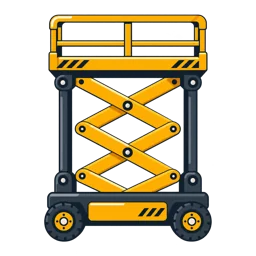
For mixed tasks with aerial lifts, note the combined amperage and simultaneous loads. If lifts are charging while lights run, runtime margins should reflect peak draw rather than average. See related lift categories at /electric-scissor-lift-rental/ and /aerial-lift-rental/ for task geometry.
Light towers: coverage and spill control
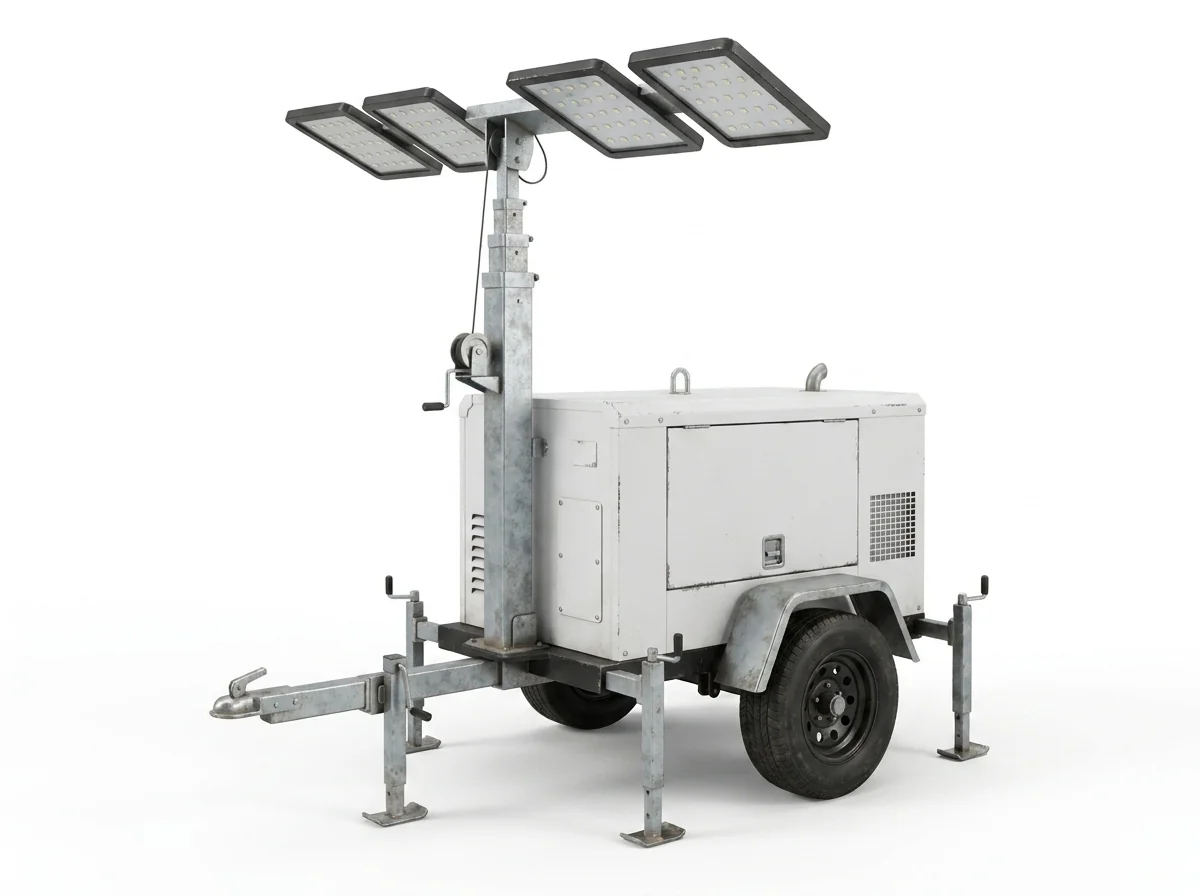
Yard lighting depends on mast height, fixture count, and required foot-candle uniformity across loading lanes and container rows. Obstacles like stacked goods create shadows; tower spacing and mast rotation affect overlap.
In Stockton’s flat yards, a few high masts may cover long runs, but dust build-up on lenses gradually narrows beam spread. Plan for periodic wipe-downs within site procedures.
Route and surface considerations
Confirm towing vehicle access from staging to work zones and the turning radius at dock aprons.
Identify firm ground for stabilizers. On softer winter soils, paved edges or mats may be needed per site procedure; machine instructions and actual conditions govern any setup.
When equipment interacts
Charging electric scissor lifts and running task lighting from the same generator changes sizing. Check lift charger draw and diversity of use over the shift.
Articulating or telescopic booms working at night benefit from towers placed so the mast is not in the swing path. Explore aerial options at /articulating-boom-lift-rental/ and /telescopic-boom-lift-rental/.
Equipment questions
Questions about Stockton planning
How do Stockton’s summer temperatures affect generator sizing?
Higher ambient heat can reduce available output and increase fuel consumption over long shifts. Allow headroom in power capacity and provide airflow around the unit so it isn’t recirculating hot exhaust.
What light tower spacing works in dusty yard conditions?
Dust can mute light and increase glare near the source. Slightly closer spacing and periodic lens cleaning within site procedures help maintain uniform coverage across lanes and staging rows.
Can a generator sit inside a warehouse for scissor lift charging?
Most indoor logistics spaces prefer outside placement because of exhaust and noise. Cables are then routed through doors or pass-throughs, with the run length and door clearances planned in advance. For strictly indoor power, confirm facility circuits and consult /electric-scissor-lift-rental/ for lift charging considerations.