Choose by task position
- Under the task with straight vertical access: electric scissor lifts for smooth floors and defined aisles. See /electric-scissor-lift-rental/.
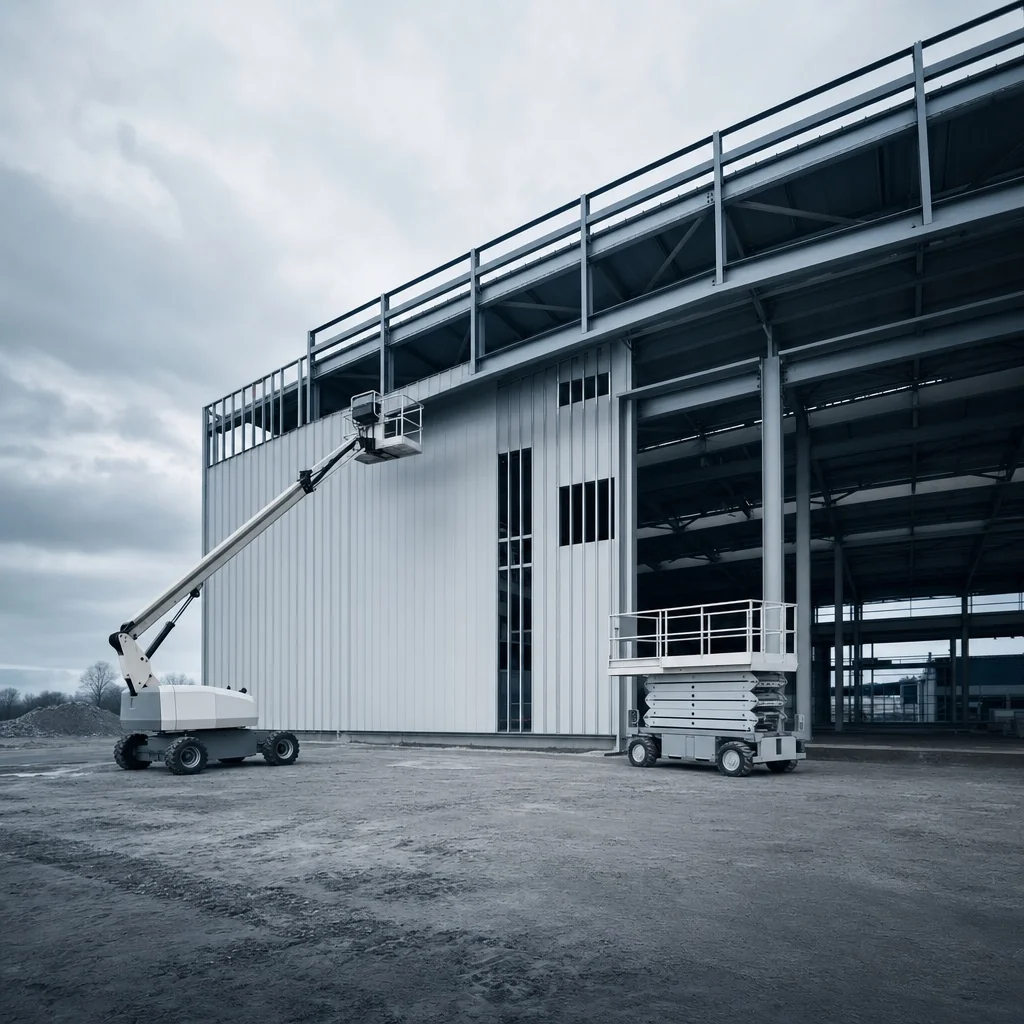
- Offset from the task or reaching over obstacles: articulating and telescopic booms for exterior facades, utilities, and yard lighting. See /articulating-boom-lift-rental/ and /telescopic-boom-lift-rental/.
- Tight indoor spots or single-pick maintenance: vertical mast lifts where light footprint and maneuverability matter. See /vertical-mast-lift-rental/.
Surface and climate factors in Stockton
- Smooth slabs inside distribution buildings favor electric units with non-marking tires and compact turning. Dust can accumulate on sensors and chargers; plan service windows around shift changes.
- Outdoor work on compacted base or fill may call for rough-terrain scissor lifts or booms with appropriate tires. After winter rain, reassess bearing capacity. Explore /rough-terrain-scissor-lift-rental/.
Height, reach, and load
- Height dictates the category short list; reach and outreach often decide between scissor and boom. Loads like signage, fixtures, and conduit influence platform capacity and deck size.
- Material handling at height may require a telehandler or forklift working with the aerial unit. Compare /telehandler-rental/ and /forklift-rental/ when the task blends people and product.
Route and access in local facilities
- Measure door widths, threshold transitions, and turning radii in narrow aisles. Many local buildings run long, straight aisles with occasional pinch points at cross-aisles.
- For yard tasks, confirm towing routes, dock apron conditions, and overhead lines. Heat and dust can affect runtime and visibility, especially on extended night shifts.
Supporting site products
- Power and lighting for night or off-shift work: /generators-light-towers-rental/.
- Jobsite storage aligned to loading flows: /storage-containers-rental/.
- Perimeter and aisle control near active equipment: /temporary-fencing-barricades-rental/.
Safety and procedures
Exterior and elevated work involve variables that change by the hour. The selected unit’s instructions, site policies, and actual conditions govern how work is performed.